Unlocking Vision: The Revolutionary Readers Eyewear Guide
Unlocking Vision: The Revolutionary Readers Eyewear Guide
The world of vision correction is undergoing a revolutionary transformation in 2025. Are you navigating the daily challenge of presbyopia, where every close-up task demands clarity? This article delves into the cutting-edge advancements in **readers eyewear**, showcasing how innovation is solving the complexities of modern vision needs. From adaptive focus technology to sustainable materials, we explore how today's solutions offer seamless sight and unparalleled convenience. Discover how to enhance your visual experience and find the perfect pair of **reading spectacles** that blend functionality with modern style, ensuring you're always seeing clearly, whether indoors or out.
【The Ever-Evolving World of Readers Eyewear】
Future of Eyewear Technology
As we navigate through 2025, the world of vision correction, particularly for those needing `readers eyewear`, is experiencing unprecedented innovation. Gone are the days when a single pair of spectacles sufficed for all close-up tasks. Today, the focus is on highly specialized and adaptable solutions that cater to the unique demands of our increasingly digital and active lifestyles. This deep dive explores the shift from basic magnification to sophisticated `vision aids` designed for optimal comfort and clarity.
Understanding Presbyopia and Your Vision Needs
Presbyopia Vision Correction Solutions
Understanding why our near vision changes and how best to address it is the first step toward finding the perfect `readers eyewear`.
The Inevitable Shift: Why Near Vision Changes
**Presbyopia** is a universal physiological change, a common condition affecting everyone as they age. It makes it progressively harder to focus on objects up close, a phenomenon often described as "age-related farsightedness." This natural stiffening of the eye's lens diminishes its ability to accommodate varying distances. The onset of **presbyopia** is typically noted around the age of 45-51, requiring some form of `reading assistance` to perform tasks like reading a book, a smartphone screen, or fine print. It's a normal part of the aging process, not a disease, and it signifies the need to explore effective **presbyopia vision correction solutions**.
Beyond Basic: Tailoring Solutions for Your Eyes
For many, particularly those with complex refractive errors, a simple pair of `readers eyewear` from a drugstore simply won't suffice. Addressing complex needs, such as varying cylindrical power or significant astigmatism in both eyes, is crucial. Off-the-shelf `reading glasses` cannot accommodate these specific prescriptions, leading to discomfort, **eye strain from reading glasses**, and inadequate vision correction. Furthermore, the challenge of managing multiple pairs for different distances or purposes – one for reading, another for computer work, and perhaps a third for hobbies – highlights the demand for more integrated and customized `ergonomic reading solutions`. Modern `corrective eyewear` aims to simplify life, not complicate it with a collection of lenses.
Traditional Reading Glasses vs. Modern Alternatives
Progressive Lenses vs Reading Glasses
While basic `reading glasses` have their place, the comparison between **progressive lenses vs reading glasses** reveals a significant leap in optical technology.
The Convenience vs. Compromise of Off-the-Shelf Readers
The allure of off-the-shelf `readers eyewear` lies in its immediate availability and low cost. Inexpensive options are readily available (e.g., some basic pairs can be found for around $4.00, though specialized ones can reach ~$40.00 or more), making them seem like a convenient solution for initial **presbyopia** symptoms. However, these generic `magnifying glasses` often lack the precision needed for specific, individualized prescriptions. They provide uniform magnification across the entire lens, which can be problematic if your eyes have different strengths or other complex needs. Moreover, state-by-state regulations can restrict the online purchase or over-the-counter sale of higher-power `readers eyewear`. For instance, New York state prohibits over-the-counter sale if exceeding 2.75 diopters, underscoring the necessity of professional eye examinations for accurate prescription **vision correction solutions**. If you're looking for quality, precise vision correction, exploring options beyond basic readers is essential. You can find a range of good reading glasses that cater to various needs and offer better optical clarity than generic options.
A Glimpse into Advanced Vision Aids
The optical industry has responded to these limitations with an exciting array of `innovative vision aids`. We are seeing the introduction to advanced solutions like **Progressive Lenses**, which seamlessly transition between different focal powers for near, intermediate, and distance vision, eliminating the need to swap glasses. **Adaptive Eyewear**, with its dynamic **adaptive focus sunglasses technology** or electronic adjustments, represents another leap, offering on-demand focus changes. Furthermore, `smart glasses`, which integrate digital displays and sometimes even augmented reality features, are redefining what `readers eyewear` can do. These `digital eyewear` solutions promise enhanced visual comfort and unparalleled flexibility, making them ideal for navigating the multi-distance demands of modern life. They often address concerns like **eye strain from reading glasses** by optimizing the visual experience for different tasks and environments.
【Embracing Adaptive Eyewear Technology for Seamless Sight】
Adaptive Focus Sunglasses Technology
The quest for seamless vision in 2025 has led to remarkable breakthroughs in **readers eyewear**, particularly in the realm of `adaptive eyewear` technology. These `innovative vision aids` are designed to provide unparalleled clarity and convenience, eliminating the need to constantly switch between different pairs of `corrective eyewear`. The core of this revolution lies in lenses that can electronically adjust their focus, catering to the dynamic visual demands of our modern lives.
The Breakthrough of Adaptive Focus Lenses
The concept of lenses that can change their optical power on demand is no longer science fiction. Advanced optical engineering is bringing these `dynamic lenses` to the market, offering a sophisticated answer to the challenges of `presbyopia`. These are not just `magnifying glasses`; they are precision instruments.
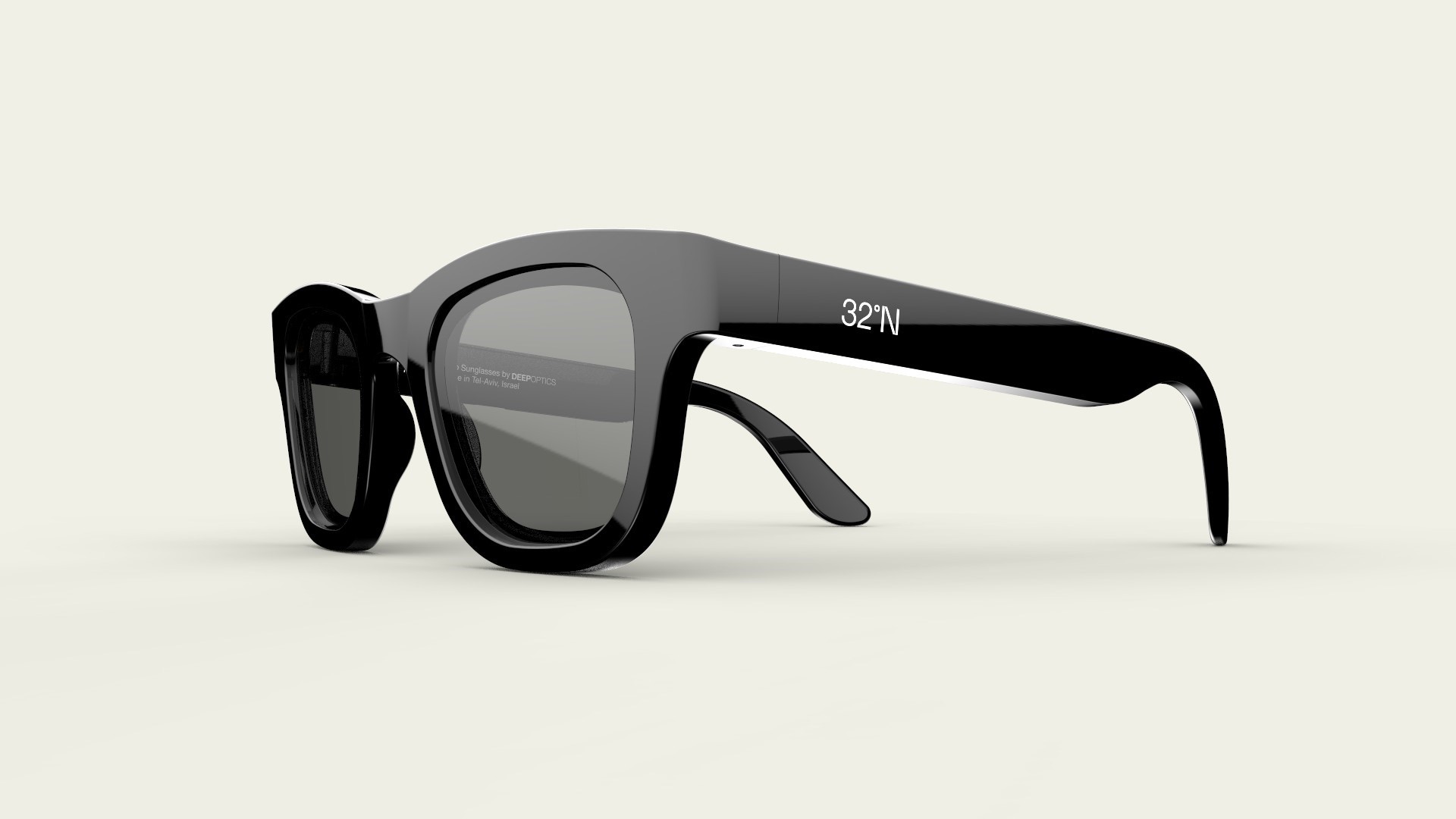
DeepOptics 32°N: A Real-World Example of Adaptive Focus Sunglasses
One prominent example of this cutting-edge technology is the DeepOptics 32°N, a true demonstration of **adaptive focus sunglasses technology**. This product showcases how far `digital eyewear` has come.
The 32°N utilizes **pixelated liquid crystal (LC) lenses** containing thousands of tiny electronic controls. These micro-elements allow the lens to rapidly and precisely alter its optical characteristics. This intricate design is fundamental to how `smart glasses` function, enabling a level of visual adaptability previously unimaginable.
Wearers can intuitively change their prescription from distance vision to reading mode with a simple, quick swipe on the frame arm. This seamless transition is a game-changer for anyone who frequently moves between different focal distances. It truly embodies the promise of **adaptive focus sunglasses technology**, providing effortless `vision correction` on the go.
Crucially, this `adaptive focus sunglasses technology` effectively eliminates the need for carrying multiple pairs of `reading glasses` or `driving glasses` while outside. Imagine a single pair of `eyewear` that serves all your outdoor visual needs, from reading a map to enjoying the scenery – a significant leap in `ergonomic reading solutions`.
How Dynamic Lenses Redefine Daily Wear
**Dynamic lenses** are at the forefront of redefining daily `eyewear` use. They electronically change their optical power to correct for different distances, all without any moving mechanical parts. This elegant design contributes to their durability and comfort, setting them apart from traditional **progressive lenses vs reading glasses** debates.
**Liquid Crystal** is a critical material for enabling this new generation of `adaptive eyewear`, as it changes optical characteristics electronically. This optical property, combined with advanced electronics, allows for instantaneous adjustments to lens power, offering wearers immediate clarity whether they are looking far ahead or at a close-up text. This innovation directly answers the question of `what are pixelated liquid crystal lenses` and their transformative impact.
As DeepOptics CEO Yariv Haddad notes, this technology adds almost no weight or bulk to the frames, offering clear insights into **how do smart glasses work** without compromising on aesthetics or comfort. This sleek integration means users can enjoy the benefits of advanced `readers eyewear` without feeling encumbered.
Benefits and Future Potential of Adjustable Prescription Eyewear
The Advantage of Consolidating Eyewear
One of the most compelling advantages of `adjustable prescription eyewear` like the DeepOptics 32°N is the ability to consolidate `eyewear`. The prescription for these glasses can be updated via an accompanying smartphone app, allowing them to stay in use longer as **presbyopia** progresses (typically stabilizing around age 65-70). This feature saves consumers the expense and hassle of repeatedly purchasing new `reading glasses` as their eyes change.
This innovation directly addresses the common question: **can dynamic lenses replace multiple glasses**? The answer is a resounding yes. By offering a singular, adaptable `vision aid`, individuals no longer need to juggle different pairs for reading, computer work, or distance viewing, significantly improving their daily convenience and reducing the risk of **eye strain from reading glasses** caused by incorrect magnification.
The Horizon of Eyewear Technology
The future of `eyewear technology` is incredibly promising, with advancements extending beyond current applications. DeepOptics plans to expand its **Liquid Crystal** lens technology to `eyeglasses` for people with **myopia** as well as **presbyopia**, suggesting a broader impact on `vision correction` for diverse needs.
Future models of `adaptive eyewear` aim for even greater autonomy, featuring automatic mode switching using eye-tracking sensors. This means the `digital eyewear` could intuitively adjust its focus based on where the wearer is looking, signaling a truly seamless and personalized experience. These developments highlight the ongoing evolution of `future of eyewear technology` and the continuous pursuit of `innovative vision aids` that enhance our daily lives.
As we look to 2025 and beyond, the advancements in **readers eyewear** promise a future where `vision correction` is more seamless, personalized, and convenient than ever before. From adaptive lenses to smart glasses, the possibilities for enhanced sight are truly exciting. And for those who appreciate both cutting-edge functionality and timeless style in their `eyewear`, a diverse collection is key. For a blend of retro charm and modern design that offers both sun protection and a statement look, you might find inspiration in options that complement even the most advanced **readers eyewear**, such as these stylish bifocal reading glasses clear on top.
【Progressive Lenses vs. Dedicated Reading Glasses: A Deep Dive】
Progressive Lenses vs Reading Glasses
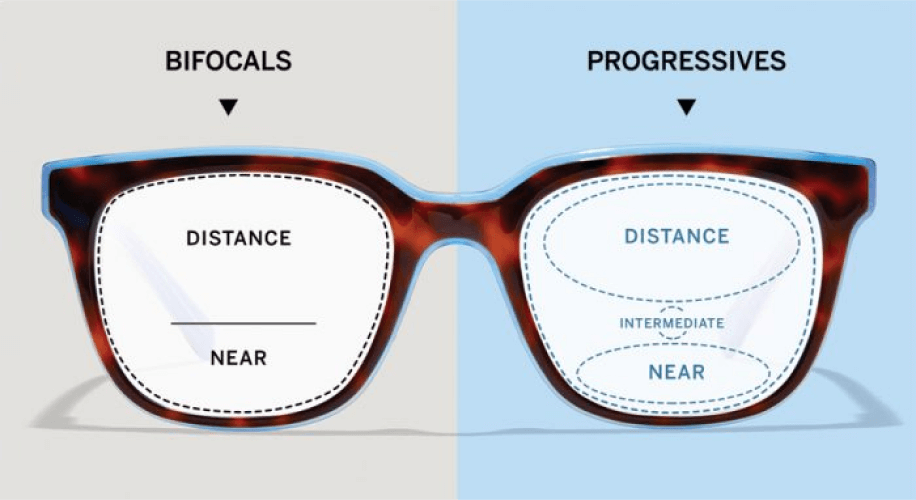
While the promise of **adaptive focus sunglasses technology** and **adjustable prescription eyewear** offers a glimpse into the future of seamless vision, many individuals still face a crucial choice in 2025: whether to opt for **progressive lenses vs reading glasses**. Both types of `corrective eyewear` serve to address `presbyopia vision correction solutions`, but they come with distinct experiences, learning curves, and financial considerations. Understanding these differences is key to making an informed decision about your optimal `vision aids`.
Navigating the Complexities of Progressive Lenses
Progressive lenses, often hailed as "no-line bifocals," offer a gradient of optical power, allowing wearers to see clearly at multiple distances without the visible line found in traditional bifocals. However, this integrated design introduces its own set of challenges.
The Steep Learning Curve and Cost of High-End Progressive Lenses
Adjusting to **progressive lenses vs reading glasses** can be a significant hurdle for many. While some fortunate individuals report adapting in just "3 to 4 days," others describe an "agonizing" process that can extend for months. This `visual adaptation` requires patience and persistence, as the brain learns to interpret the varied focal points within the lens.
The cost associated with **high-end progressive lenses** is another considerable factor. While "cheapie" options might be found for around 10,000 INR (approximately $120-$150 USD), user experiences frequently indicate that such budget-friendly choices often lead to poor adoption and dissatisfaction. Comfortable and truly effective solutions, which offer superior `lens quality` and wider `visual fields`, may start at 25,000 INR (approximately $300-$350 USD) and often climb much higher. This makes them a significant `optical investment` compared to simpler `vision wear`.
User experiences consistently highlight the necessity of patient `adjusting to progressive glasses tips` and consistent practice to find the optimal "sweet spot" within the lenses. Without this dedication, the full benefits of these sophisticated `optical aids` can remain elusive, leading to frustration and continued reliance on other **readers eyewear** solutions.
Understanding the "Sweet Spot" and "Bobbing" Phenomenon
A common complaint among new progressive lens users is the struggle to find the optimal viewing area for different distances. This challenge often results in what is colloquially known as the "bobbing" phenomenon, where individuals find themselves "bobbing [the] whole face up-down, left to right" to align their eyes with the correct focal zone. This continuous movement can be distracting and, for some, even lead to mild discomfort or dizziness.
This struggle stems directly from the design of progressive lenses, where different sections of the lens are subtly blended for multiple uses—distance vision at the top, intermediate in the middle, and near vision at the bottom. While this offers seamless transitions, it also means there are peripheral distortions, or "swim" effects, in the side areas of the lenses. Some users find this more difficult to acclimate to than the distinct `disadvantages of bifocal lenses`, which, despite their visible line, provide clear, segmented fields of vision. The absence of a clear boundary in progressives requires a different kind of `neurological adjustment` from the wearer.
The Case for Multiple Pairs of Reading Glasses
Cost-Effectiveness and Task-Specific Benefits
A pragmatic and often "much cheaper and more comfortable" strategy, particularly for those who do not require constant `distance vision correction`, involves owning "five sets of glasses" or more. This allows for specialized `eyewear` tailored to specific tasks, such as a pair for travel, another for home reading, `intermediate computer work glasses`, and separate pairs for `distance vision`. This approach is far less demanding on the user's `visual comfort` than attempting to find a single pair that serves all purposes.
This diversified approach also allows for the integration of specific features that enhance task performance and `eye health`. For instance, a dedicated pair of `computer eyewear` can be equipped with a `blue light coating` to mitigate `digital eye strain` during prolonged screen use. This directly addresses the need for **best eyewear for digital screens**, ensuring optimal protection and clarity while interacting with electronic devices. Similarly, specialized `magnifying glasses` can be chosen for hobbies requiring very fine detail work. For those looking for versatile and fashionable options for different settings, a wide range of womens stylish reading glasses are available, allowing you to choose the perfect pair for every activity and outfit.
Addressing Eye Strain from Reading Glasses and Ergonomic Reading Solutions
Dedicated **reading glasses** or specialized `ergonomic reading solutions` for specific tasks can significantly reduce discomfort and `eye strain from reading glasses`. When the power of the `lens technology` is precisely matched to the working distance, the eyes do not have to strain to focus, leading to a more relaxed and comfortable visual experience, even during prolonged reading or detailed work.
Ensuring the correct `prescription accuracy` for each distance—near for books, intermediate for computer screens, and far for driving—is paramount. By eliminating the need to search for the "sweet spot" or make constant head movements, dedicated single-vision `optical aids` minimize the `eye strain from reading glasses` often associated with incorrect magnification or the complex visual pathways of progressive lenses. This focused approach provides targeted `vision correction` that directly enhances daily `visual comfort` and productivity.
【Specialized Readers Eyewear for Comfort and Convenience】
innovative vision aids

Beyond the complex debate between progressive lenses and dedicated **reading glasses**, a world of specialized **readers eyewear** exists, designed specifically to enhance comfort and provide tailored convenience. In 2025, these `innovative vision aids` are becoming increasingly popular, offering targeted solutions for unique daily challenges and ultimately improving the user's `visual comfort`. For individuals seeking precise `vision solutions`, exploring these options can lead to significant improvements in their daily routine.
Innovative Solutions for Ergonomic Reading
ergonomic reading solutions
True `ergonomic reading solutions` go beyond simply providing `magnification`. They address the physical strains and postures that often accompany prolonged reading or screen time. These `innovative solutions` aim to integrate seamless `vision correction` with enhanced comfort, making tasks like reading or working on a computer less taxing on the body.
The Pros and Cons of Lazy Reader Glasses for Neck Pain Relief
One such innovative solution gaining traction for specific use cases is the concept of "lazy reader glasses." These unique `optical aids` are designed to alleviate `neck pain` and promote a more relaxed reading posture. For those who enjoy reading or watching media while lying flat, `prism glasses` like the Vinmax Lazy Readers offer a clever workaround. They use angled mirrors to redirect your line of sight, allowing you to read a book or watch a screen directly overhead without craning your neck. This effectively delivers **lazy reader glasses neck pain relief**, transforming your `reading experience`.
While these **reading spectacles** provide `clear image quality` for horizontal viewing, they come with certain limitations. Users may experience disorientation, nausea, or headaches, particularly during extended use. This is due to the altered perception of space and depth. Crucially, these specialized `vision aids` are "not recommended for wearing while walking" or performing any activity requiring normal depth perception, as they can significantly compromise balance and safety. They are best reserved for stationary, relaxed reading.
Eyewear Designed for Digital Screen Protection
In an increasingly digital 2025, the demand for **eyewear for digital screens** has skyrocketed. Prolonged exposure to digital devices emits blue light, a known contributor to `digital eye strain`, `disrupted sleep patterns`, and general `visual fatigue`. To mitigate these effects, `blue-light blocking lenses` have become an essential component of **best eyewear for digital screens**.
These specialized `computer eyewear` feature coatings or integrated lens materials that filter out a significant portion of harmful blue light, reducing glare and enhancing contrast. Choosing the `right blue-light filtering readers` can be crucial for digital professionals, students, and anyone spending extended periods in front of computers, tablets, or smartphones. This proactive approach to `vision protection` helps ensure long-term `eye health` and maintains `visual comfort` during intensive screen use. For those spending hours on screens, finding the right pair is crucial. A wide selection of these specialized `optical aids`, including blue-light filtering **readers eyewear**, is available to help protect your eyes and enhance your digital experience. amazon readers glasses
Choosing Comfortable and Practical Eyewear
how to choose comfortable eyewear
Beyond specialized functions, the fundamental choice of **readers eyewear** often comes down to comfort and practicality. Ensuring your `vision aids` fit well and serve their purpose without causing inconvenience is paramount for daily wear. Understanding **how to choose comfortable eyewear** involves considering factors beyond just your prescription.
Considerations Beyond Prescription
When selecting any type of `corrective eyewear`, `comfort is paramount`. Frames should fit snugly without pinching, and they must not slide down your nose, especially during movement or prolonged use. A poorly fitting pair of `reading spectacles` can lead to constant adjustments, skin irritation, and even headaches, negating their purpose. For many, prioritizing `lens quality` over the aesthetic cost of the frame is a smart strategy. As the saying goes, "the quality of the coffee matters not the cup." This philosophy emphasizes that investing in superior `optical clarity` and `lens technology` will deliver a better `visual experience` than an expensive, but optically inferior, frame. While the **cost of high-end progressive lenses** might be significant, even with standard `single-vision readers`, opting for higher quality lenses can make a remarkable difference in overall `visual comfort` and durability.
Solving Common Eyewear Problems
Even the most carefully chosen **readers eyewear** can present common challenges. Lenses getting dirty quickly, or glasses being frequently lost or broken, are frustrating issues many `eyewear` users face. Fortunately, simple `ergonomic reading solutions` exist to combat these everyday nuisances. A basic `neck chain` or `eyeglass cord` can be an incredibly effective tool. By keeping your `reading glasses` readily accessible around your neck, you significantly reduce the chances of misplacing them. This also offers an incidental form of **lazy reader glasses neck pain relief**, as you no longer need to search frantically for your `specs`, often contorting your body in the process. This holistic approach to `eyewear management` helps tackle **common eyewear problems and solutions**, ensuring your `vision aids` remain an integral and convenient part of your **eyewear for active lifestyles**.
Beyond practical reading solutions, consider how your choice of `eyewear` also impacts your style and protection. For instance, whether you're relaxing with a book outdoors or simply seeking a stylish accessory, `sunglasses` are an essential part of **eyewear for active lifestyles**. To explore a range of `retro-inspired` `sunglasses` that combine `vintage aesthetics` with modern `sun protection`, consider checking out options like the Round Retro Sunglasses Women Men Vintage Sun Glasses Female Male Designer Outdoors Punk Mirror Shades Oculos De Sol, perfect for adding a touch of `designer flair` to your `outdoor activities`.
【Sustainable Eyewear and the Future of Vision】
sustainable eyeglasses materials

As 2025 progresses, the conversation around `sustainability` is no longer limited to food or fashion; it has profoundly impacted the **readers eyewear** industry. Consumers are increasingly seeking `eco-friendly alternatives` for their `vision solutions`, driving a significant shift towards more `responsible manufacturing` and `sustainable materials`. This global demand underscores the importance of **sustainable eyeglasses materials** in shaping the `future of eyewear`. Choosing `eco-conscious vision aids` is not just a trend but a commitment to a healthier planet.
Embracing Eco-Friendly Materials in Eyewear
The `eyewear industry` is undergoing a transformation, with a growing emphasis on `environmental stewardship`. This shift is evident in the innovative use of `recycled`, `upcycled`, and `naturally sourced materials` for frames and even lenses. Embracing `eco-friendly materials` means reducing `waste`, minimizing `carbon footprint`, and supporting `ethical production practices`. This conscious approach to `eyewear design` ensures that your `vision aids` contribute positively to the environment.
Brands Leading the Way in Sustainable Eyeglasses Materials
Several pioneering brands are at the forefront of this `sustainable revolution`, redefining what's possible in **readers eyewear** production. These companies are not just making `glasses`; they are building a `circular economy` within the `eyewear sector`.
Genusee, for example, is making a significant impact by creating **optical aids** from `15 recycled plastic water bottles` sourced directly from the Flint Water Crisis. This not only diverts waste but also generates much-needed `living-wage jobs` in the community. Their commitment extends beyond `product creation` to `social responsibility`, offering truly `sustainable eyeglasses materials`.
Bôhten stands out by utilizing `sustainably-harvested materials` such as `reclaimed wood` and `discarded materials` from Africa. They also support `tree-planting programs`, actively contributing to `reforestation efforts`. This holistic approach makes their `prescription glasses` and `sunglasses` a truly `eco-conscious` choice.
Ballo, a `circular and carbon-neutral company`, exemplifies `waste reduction` by using `offcuts`, `recycled materials`, and `natural resources` like `wood`, `cork`, and `hemp`. For every pair of their `stylish vision aids` sold, they plant a tree, reinforcing their commitment to `environmental regeneration`.
Pela Vision is leading the charge with `100-percent biodegradable sunglasses` and `blue-light glasses`, emphasizing `compostability`. Their innovative `plant-based materials` mean that at the end of their life cycle, these `eyeglass frames` can return to the earth without harming the environment, making them an excellent choice for `conscious consumers`.
LaBante London manufactures `sunglasses` from `100% percent recycled wood`, packaged in `bamboo and cardboard`. They adhere to `PETA-approved vegan` and `ethical standards`, ensuring that their `eyewear solutions` are free from animal products and produced with `fair labor practices`. These brands collectively represent the vanguard of **sustainable eyeglasses materials**.
The Impact of Responsible Manufacturing on Eyewear
The collective efforts of these brands highlight the profound `impact of responsible manufacturing on eyewear`. Their focus extends to `local production`, ensuring `fair labor practices`, and significantly `reducing their environmental footprint`. This is achieved through `innovative material sourcing` and stringent `waste reduction strategies`. These initiatives are not just about producing `eco-friendly eyewear` but about fostering a more `sustainable` and `ethical supply chain`. Ultimately, these efforts are crucial in shaping the **future of eyewear technology**, making `sustainable practices` the standard rather than the exception.
Responsible Disposal and the Future of Eyewear Recycling
Donating and Recycling Old Glasses
For those looking to responsibly part with their `old spectacles`, several avenues exist. Organizations like ReSpectacle and OneSight readily accept `donations of gently-used prescription` or `non-prescription glasses`. These `vision aids` are then refurbished and provided to individuals in need globally, extending their lifespan and serving a crucial `social purpose`.
Many `local opticians` also offer `convenient collection points` for `old glasses`, redirecting them to partner charities or `recycling programs`. This makes `donating old eyewear` an accessible and impactful way to contribute. For `unwearable glasses` – those that are broken or severely damaged – specialized solutions are emerging. TerraCycle's "Eyewear Zero Waste Box" is one such initiative, ensuring `proper recycling` of components that might otherwise be unrecyclable through traditional means. This comprehensive approach addresses various scenarios for `eyewear disposal`, moving towards a more `circular model`.
Industry Innovations in Eyewear Sustainability
The `eyewear industry` is constantly evolving, with significant `innovations in eyewear sustainability` driving change. One notable example is Warby Parker's partnership with Eastman, which tackles the pervasive issue of `demo lens disposal`. Historically, these `plastic demo lenses`, often discarded after initial frame fitting, created an astounding `5,000 tonnes of waste annually industrywide`.
Through `Carbon Renewal Technology`, Eastman can now break down these `plastic demo lenses` to their `molecular level`. The recovered materials are then reused to create `Eastman Acetate Renew`, a more `sustainable version of traditional acetate`. This groundbreaking process showcases a growing commitment to `circularity` within the industry and highlights the ongoing evolution of **eyewear technology**. Such `innovative solutions` are vital for reducing `environmental impact` and paving the way for a truly `sustainable future` for **readers eyewear** and `vision solutions` globally.
For those considering the blend of style, comfort, and protection in their daily **readers eyewear**, remember that `vision solutions` are constantly evolving. Whether you're looking for innovative `adaptive focus sunglasses technology` or simply a stylish pair of `spectacles` that offer `UV protection`, there's a range of options to explore. If you're seeking `vintage-inspired` designs that combine `retro aesthetics` with modern `sun protection` and style, consider enhancing your `outdoor activities` with options like the Round Retro Sunglasses Women Men Vintage Sun Glasses Female Male Designer Outdoors Punk Mirror Shades Oculos De Sol, which offers a unique blend of `fashion` and `function` for those seeking versatile `transition reading glasses` and general `eyewear` alike.
Your Path to Optimal Vision: Clarity, Comfort, and Sustainability in 2025
As we conclude our exploration into the dynamic world of modern **reading spectacles**, it's clear that the future of vision correction is more exciting and tailored than ever before. Gone are the days of one-size-fits-all solutions; 2025 emphasizes personalized, technologically advanced, and environmentally conscious eyewear choices designed to meet the unique demands of our increasingly digital and active lives.
We've seen how the industry is moving beyond basic magnification to offer sophisticated **presbyopia vision correction solutions**, addressing complex needs that off-the-shelf readers simply cannot accommodate. The debate between **progressive lenses vs reading glasses** highlights a significant leap in optical technology, offering wearers the choice between seamless multi-distance vision and the convenience of task-specific pairs. While progressive lenses offer an all-in-one approach, they come with a learning curve and higher investment. Conversely, maintaining multiple pairs of dedicated **reading spectacles** provides cost-effectiveness and reduces **eye strain from reading glasses** by ensuring precise magnification for each specific activity, be it reading a book, working on a computer, or enjoying outdoor hobbies.
The emergence of **innovative vision aids** like **adaptive focus sunglasses technology** truly redefines convenience, allowing electronic adjustments to focus with a simple swipe. These **dynamic lenses** are poised to consolidate multiple pairs into one, promising an unburdened visual experience. Furthermore, specialized **readers eyewear** such as "lazy reader glasses" offer **neck pain relief** for specific postures, while **eyewear for digital screens** with **blue-light blocking lenses** becomes crucial for protecting our eyes in a screen-dominated world.
Beyond functionality, the emphasis on **how to choose comfortable eyewear** underscores the importance of proper fit and **lens quality** for daily wear, ensuring your chosen **reading spectacles** are a natural extension of your vision, not a hindrance. Simple **ergonomic reading solutions** like neck cords can significantly alleviate **common eyewear problems and solutions** like losing or breaking glasses.
Finally, the shift towards **sustainable eyeglasses materials** signals a profound commitment to environmental stewardship within the **readers eyewear** industry. Brands are leading the way with innovative uses of recycled, upcycled, and naturally sourced materials, alongside responsible manufacturing practices. The future also holds promise for enhanced recycling initiatives, ensuring that old glasses contribute to a circular economy.
In essence, whether you prioritize cutting-edge technology, ergonomic comfort, or eco-conscious choices, the market for **reading spectacles** in 2025 offers an unprecedented array of solutions. Embracing these advancements will not only enhance your visual clarity but also contribute to a more sustainable and comfortable lifestyle.
MjAyNTA4MTgwNjA2MjY 当前显示MjAyNTA4MTgwNjA2MjY。


Comments
Post a Comment