The Ultimate Guide to the Bifocal Lens
The Ultimate Guide to the Bifocal Lens
Struggling to read your phone but need clear vision for driving? You're not alone in facing this common vision challenge. A bifocal lens is expertly designed to solve this exact problem, combining two distinct prescriptions into a single, seamless lens. This eliminates the need to constantly switch between glasses, providing sharp, clear vision for both distant scenes and up-close tasks. If you're ready to simplify your eyewear and restore clarity, explore our comprehensive collection of bifocal lens options to find the perfect solution for your lifestyle.
【What is a Bifocal Lens?】
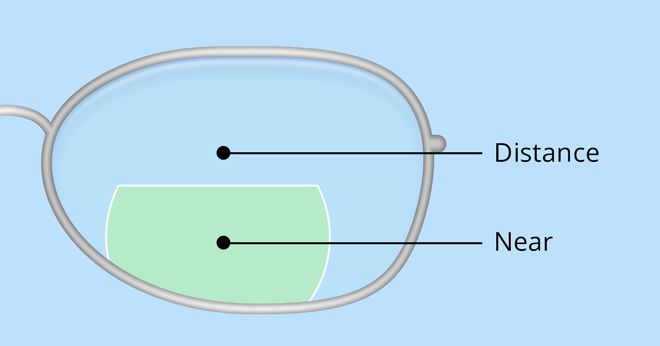
A bifocal lens is a remarkable piece of optical technology designed with two distinct prescriptions in one single lens. Think of it as having two pairs of glasses seamlessly combined into one. This dual-power design is crafted to solve a very common vision problem that many people face as they age.
The primary purpose of a bifocal lens is to provide clear vision for both distant and near objects. If you've ever found yourself holding a menu at arm's length to read it, you're experiencing the exact issue that bifocals were invented to correct. They eliminate the need to constantly switch between different pairs of glasses for different tasks.
How Do Bifocal Lenses Work?
The magic of bifocal lenses lies in their simple yet effective construction. Each lens is divided into two sections, each with a different optical power, to cater to different viewing distances.
This design directly addresses the wearer's specific visual needs. The larger, upper portion of the lens is typically for distance vision—helping you see clearly when driving or watching television. The smaller, lower segment contains the stronger prescription for close-up work, such as reading a book or using a smartphone.
Two Prescriptions in a Single Lens
So, how are two prescriptions physically placed onto a single lens? In traditional bifocals, you can often see a distinct line or a D-shaped segment near the bottom. This line separates the distance-vision part from the near-vision, or "add power," segment.
When you look straight ahead, your eye naturally uses the top portion for distance. When you lower your gaze to read, your eye looks through the bottom reading segment. This provides the extra magnification needed to see close-up text and objects sharply.
Correcting Presbyopia and Other Vision Issues
The most common reason people need a bifocal lens is a condition called presbyopia. This is the normal, age-related loss of the eye's ability to focus on nearby objects, and it typically becomes noticeable in your early to mid-40s. A 2025 report from the American Academy of Ophthalmology highlights that presbyopia is a natural part of the aging process.
Bifocals correct presbyopia by providing that dedicated reading segment. However, they are also versatile. The distance portion of the lens can simultaneously correct other common refractive errors, such as nearsightedness or farsightedness, making them a comprehensive vision solution. If you suspect your vision challenges require a multi-focus solution, exploring a range of dual-power eyewear can clarify which options best suit your lifestyle.
Understanding Your Need for Vision Correction
To know if a bifocal lens is right for you, it's helpful to understand the basic types of vision problems, known as refractive errors. These occur when the shape of your eye prevents light from focusing correctly on the retina—the light-sensitive tissue at the back of the eye.
An optometrist diagnoses these conditions during an eye exam and provides a prescription to correct them. This prescription can then be used to create lenses, including bifocals, that are tailored to your unique eyes.
What is Nearsightedness (Myopia)?
Are distant objects, like road signs or a screen across the room, blurry while things up close are clear? This condition is nearsightedness, or myopia. It happens when the eyeball is slightly too long or the cornea has too much curvature, causing light to focus in front of the retina instead of directly on it.
A standard bifocal lens can easily accommodate a prescription for myopia in its upper distance-vision area. This corrects your ability to see far away, while the bottom segment still provides the power you need for reading.
What is Farsightedness (Hyperopia)?
Farsightedness, or hyperopia, is essentially the opposite of myopia. It can cause nearby objects to appear blurry because the eyeball is too short or the cornea is too flat. This forces light to focus at a point behind the retina.
In some cases, people with hyperopia may also experience blurry distance vision and eye strain. It's important not to confuse this with presbyopia, although both affect near vision. A bifocal lens can correct for hyperopia in the top part while the bottom segment addresses the additional focusing issues from presbyopia.
What is Astigmatism Correction?
Astigmatism is a very common condition that results in blurry or distorted vision at all distances. It's caused by an irregular, non-spherical curvature of the cornea or lens. A helpful analogy is to imagine the eye is shaped more like a football than a perfectly round basketball.
This irregular shape prevents light from focusing to a single point on the retina. A bifocal lens can be manufactured to include astigmatism correction in both the distance and near segments, providing clear, stable vision for all tasks. Understanding these core vision issues is the first step toward finding the right solution; the next is seeing how a single lens can solve multiple problems at once. To see the variety of ways glasses can be customized for your specific needs, review this collection of bifocal lens options.
【How to Read Your Eye Prescription for Bifocals】

Receiving your eye prescription can feel like trying to decipher a secret code. But understanding these numbers and abbreviations is the first step toward getting the perfect pair of bifocal lenses that will restore your clear vision. Your prescription is a detailed map of the correction your eyes need.
Learning to read this document empowers you to be an active participant in your vision care. It helps you understand exactly how your new glasses, especially a multi-focal pair, will work to correct your specific visual challenges.
Decoding the Numbers and Abbreviations
Your glasses prescription contains several key terms: SPH, CYL, Axis, and Add. These values, provided by your optometrist, precisely describe the power and configuration needed for your lenses.
Each of these measurements is crucial for crafting a bifocal lens that provides both sharp distance vision and clear reading vision in a single, convenient pair of eyeglasses.
SPH, CYL, and Axis: Understanding Diopters in Eyeglasses
The term 'SPH' stands for "Sphere," and it indicates the main strength of the lens, measured in units called diopters. A minus sign (-) means you are nearsighted, while a plus sign (+) signifies you are farsighted. This value corrects your primary vision deficiency.
'CYL,' or "Cylinder," indicates the amount of lens power needed for astigmatism. If this column is blank, you have little to no astigmatism. 'Axis' is paired with the CYL value; it's a number from 1 to 180 that denotes the orientation of the astigmatism correction on the lens.
What Does 'Add' Power Mean on a Glasses Prescription?
The 'Add' power is the most important figure on a prescription when ordering a bifocal lens. This value, short for "Addition," represents the magnifying power added to the bottom portion of the lens to correct presbyopia and help you with near-vision tasks like reading.
This number is always positive (+) and is typically the same for both eyes. It's literally the "added" strength you need to focus on objects up close, which your eyes can no longer do easily on their own.
The Critical Importance of Pupillary Distance (PD) for Bifocals
Pupillary Distance, or PD, is the measurement in millimeters between the centers of your pupils. This measurement is absolutely critical for bifocals because it ensures the optical centers of the lenses are precisely aligned with your line of sight.
For a bifocal lens, an accurate PD is even more vital. It determines the correct placement of the dividing line between the distance and near-vision segments. Proper alignment is key to a comfortable and effective visual experience. To ensure your prescription details, including PD, are perfectly matched to your frames, it's beneficial to browse a variety of customizable bifocal glasses.
Bifocal vs. Progressive Lenses: Making the Right Choice
When correcting for presbyopia, you generally have two primary multi-focal lens choices: traditional bifocals or modern progressive lenses. While both achieve the goal of providing clear vision at multiple distances, they do so in very different ways.
Understanding the fundamental differences between these two types of lenses is essential for making the right choice based on your lifestyle, budget, and aesthetic preferences.
The Distinct Line of Traditional Bifocals
A traditional bifocal lens is characterized by a visible line that separates the two vision zones. This line creates a distinct boundary between the upper distance-vision area and the lower near-vision segment.
This design offers a very wide and clear field of view for both distance and reading. However, some wearers experience an "image jump," where objects seem to abruptly move as their gaze crosses the line.
The Seamless Transition of Progressive Lenses
Progressive lenses, often called "no-line bifocals," offer a seamless and gradual transition of power. The lens power changes smoothly from distance at the top, through an intermediate zone in the middle, down to the full reading power at the bottom.
The primary advantage is the lack of a visible line, which is more cosmetically appealing and eliminates image jump. They also provide a useful intermediate focus for tasks like computer use, though this corridor of clear vision can be narrower than in a traditional bifocal.
Presbyopia Correction Options: A Comparison
Choosing between a bifocal and a progressive lens comes down to your personal needs. A bifocal lens is an excellent, often more affordable, option for individuals who prioritize a wide, clear reading area and are not bothered by the visible line.
Progressive lenses are ideal for those seeking a more modern, no-line look and who would benefit from the intermediate vision zone for computer work. They may require a short adaptation period to get used to the different visual zones. Ultimately, understanding the differences helps you discuss your needs with an optician. Exploring the features of both styles can make your decision clearer; see a full range of multi-focal eyewear designs to find your perfect match.
【Myopia Management: A New Role for Bifocals】

While traditionally associated with correcting age-related farsightedness, the bifocal lens is gaining a groundbreaking new role in pediatric eye care. As of 2025, a growing body of research shows that specialized multifocal lenses can be a powerful tool for myopia management in children.
This innovative approach aims not just to correct a child's blurry distance vision, but to actively slow down the progression of their nearsightedness. It represents a significant shift from reactive vision correction to proactive ocular health management.
Can Bifocal Lenses Help Children with Myopia?
So, can a bifocal lens really help a child with progressing nearsightedness? The answer from recent scientific studies is a resounding yes. Specifically designed multifocal contact lenses are proving to be one of the most effective interventions for what optometrists call "myopia control."
These are not the same bifocals your grandparents wear. They utilize advanced optical designs to send specific light signals to the eye, tackling the root cause of myopia progression in young, developing eyes.
The BLINK Study: Slowing Myopia Progression in Children
A landmark study validating this approach is the Bifocal Lenses in Nearsighted Kids (BLINK) study, funded by the U.S. National Eye Institute. This three-year randomized clinical trial was designed to rigorously test whether commercially available multifocal soft contact lenses could slow myopia progression in children.
The results of the BLINK study provided definitive evidence that has changed the standard of care in pediatric optometry, giving eye doctors a proven method for managing childhood nearsightedness.
Data: High-Add Multifocal Lenses Slowed Nearsightedness by 43%
The data from the BLINK study was compelling. Researchers found that children wearing high-add power multifocal contact lenses experienced a 43% slowing in myopia progression compared to children wearing standard single-vision lenses.
Furthermore, the physical lengthening of the eye, known as axial elongation, was slowed by 36% in the high-add group. This data demonstrates that a specific type of `bifocal lens` design can significantly impact the anatomical changes that cause nearsightedness to worsen.
Benefits of Multifocal Contact Lenses vs. Glasses for Kids
For active children, multifocal contact lenses often offer distinct advantages over glasses. They provide an unobstructed, wider field of view, which is beneficial for sports and play. There is also no risk of frames breaking or getting lost during vigorous activity.
From a therapeutic standpoint, contact lenses move with the eye, ensuring that the myopia-controlling optics remain properly centered. This provides a more consistent treatment effect than glasses, where a child might look over the top of the frames. To understand the different types of lenses available for myopia and other conditions, you can see a full range of advanced multifocal lens solutions.
The Science Behind Slowing Myopia Progression in Children
The effectiveness of using a `bifocal lens` for myopia control isn't magic; it's based on a sophisticated understanding of how the eye grows. The science centers on manipulating how light is focused on the retina, particularly in the periphery.
Traditional single-vision glasses and contacts correct central vision perfectly. However, they can cause light in the periphery to focus *behind* the retina. This "peripheral hyperopic defocus" is thought to be a primary signal that tells the eyeball to grow longer, thus worsening myopia.
How Multifocal Contact Lenses for Myopia Change Retinal Focus
Multifocal contact lenses designed for myopia management work by flipping this signal. They have a center-distance design that provides clear central vision, surrounded by rings of higher power (+ power).
This design simultaneously brings peripheral light rays to a focus *in front* of the retina, creating what is known as "peripheral myopic defocus." This signal is believed to inhibit eye growth, effectively telling the eye it doesn't need to get any longer.
The "Sweet Spot": Why High-Add Power is Effective
The BLINK study identified a "sweet spot" for treatment. The children wearing the high-add power (+2.50 D) lenses had the best results. This is because the stronger "add" power created a more significant amount of peripheral myopic defocus.
This stronger inhibitory signal proved most effective at slowing down the axial elongation of the eyeball. The study essentially showed a dose-dependent response: the more add power, the better the myopia control effect, up to the tested +2.50 D level.
Adjusting to New Bifocal Glasses: Why Kids Adapt Easier than Adults
A common concern for parents is whether their child will struggle to adapt to multifocal vision. Fortunately, children's brains have remarkable neuroplasticity, meaning they adapt to new visual information far more readily than adults.
While an adult might need weeks to feel comfortable with new bifocal or progressive lenses, most children adjust to multifocal contacts within just a few days. Their visual system quickly learns to use the different zones of the lens for clear vision at all distances without issue. Understanding the science behind these lenses can help you appreciate the technology involved; to see how this translates into real-world products, you can explore various options for a modern bifocal lens.
【New Technology in Eyeglasses 2024: The Future of Vision】

The innovation driving myopia management is just one facet of a broader revolution in vision correction. As of 2025, the technology behind the traditional `bifocal lens` is evolving rapidly, paving the way for "smart" eyeglasses that can adapt to our needs in real-time.
These advancements promise to solve the fundamental limitations of static prescription lenses, offering a dynamic and seamless visual experience that was once the stuff of science fiction. The future is focused on creating eyewear that works more like the natural human eye.
Smart Glasses with Adjustable Focus
Imagine a single pair of glasses that eliminates the need for separate reading and distance prescriptions. This is the promise of smart glasses with adjustable focus, a technology set to redefine vision correction for those with presbyopia.
These are not your standard bifocals. Instead of requiring you to look through a specific part of the lens, these "autofocals" can change their entire optical power on demand, providing clear vision at any distance you look.
How Liquid Lenses Automatically Adapt to Your Vision
The core of this technology lies in liquid lenses. These lenses are crafted from a flexible membrane enclosing a transparent optical fluid. By applying a small electrical current, the shape of the membrane can be altered with precision.
This change in curvature modifies the focal length of the lens, much like the crystalline lens inside a young, healthy eye flexes to focus on objects at different distances. It’s a bio-inspired solution to an age-related problem.
The University of Utah Prototype: Focus Adjustment in 14 Milliseconds
To prove this isn't just a concept, researchers at the University of Utah have developed a working prototype that demonstrates incredible performance. Their liquid lens eyeglasses can change focus in a mere 14 milliseconds.
This near-instantaneous adjustment is faster than the eye can detect, meaning the transition from looking at a distant sign to a book in your hands is completely seamless. The glasses work in tandem with an eye-tracking sensor to know exactly where you are looking and adjust the focus automatically.
Calibrating Your Vision with a Smartphone App
Setting up these futuristic glasses is surprisingly simple. The user's prescription data is initially programmed into the eyewear via a companion smartphone app through a Bluetooth connection.
This app allows for initial calibration and fine-tuning, ensuring the automatic adjustments are perfectly matched to the individual's specific vision correction needs. While this advanced electronic eyewear is still in development, you can explore the most sophisticated non-electronic options available today to find the perfect vision correction technology for your current needs.
Liquid Crystal Lens Technology and Other Innovations
Beyond shape-changing liquid lenses, another powerful technology is emerging from the world of digital displays: liquid crystals. This approach offers a different method for creating dynamic, adjustable eyeglasses without any moving parts.
This solid-state solution leverages the light-bending properties of liquid crystal molecules to create switchable-focus lenses, opening up new possibilities not only for vision correction but for other optical devices as well.
Bilayer Liquid Crystal Structures: Bifocal Lenses with Adjustable Intensity
One of the most promising applications is the creation of an adjustable `bifocal lens`. By using a bilayer liquid crystal structure, engineers can create a lens that operates in two modes.
In its "off" state, the lens provides clear distance vision. When a small voltage is applied, the liquid crystals reorient themselves to create a second focal point—a reading "add" power—in the lower portion of the lens. The strength of this electronic bifocal effect can even be adjusted by the user.
Innovative Optical Devices for Vision: Applications in AR/VR
The impact of these innovative optical devices extends far beyond standard eyeglasses. Adjustable lens technology is a critical component for the next generation of Augmented Reality (AR) and Virtual Reality (VR) headsets.
These lenses can solve a major issue known as the vergence-accommodation conflict, which causes eye strain and nausea for many users. By dynamically adjusting focus to match the virtual depth of an object, these devices can create far more realistic and comfortable immersive experiences.
Comparing Types of Vision Correction Lenses in Development
When we compare these new technologies, we see distinct approaches to solving vision problems. Multifocal contacts for myopia manipulate peripheral focus. Liquid lenses mimic the eye's mechanics, while liquid crystal lenses offer a solid-state, switchable solution akin to an electronic `bifocal lens`.
Each of these developmental technologies offers unique benefits. While we anticipate their arrival, understanding the high-tech options available now is crucial for making an informed choice. To compare the most advanced multifocal and progressive lenses on the market, you can review the latest bifocal lens designs and find what works best for you.
Throughout this guide, we've explored the remarkable world of the bifocal lens, from its fundamental design to its exciting future. Let's recap the essential points to help you make an informed decision about your vision.
First, we established that a bifocal lens is a powerful and practical solution for presbyopia, the age-related difficulty in focusing on near objects. By incorporating two distinct prescriptions—one for distance and one for reading—into a single lens, it eliminates the inconvenience of switching between multiple pairs of glasses. Understanding your prescription, with its key terms like SPH, CYL, and especially the 'Add' power, is the first step toward getting a pair tailored perfectly for you.
We also compared traditional bifocals with their modern counterparts, progressive lenses. The key distinction lies in the visible line of a bifocal, which provides a wide and distinct field of view for near and far tasks, versus the seamless, no-line transition of a progressive lens, which also offers an intermediate focus range. Your choice depends on your lifestyle, aesthetic preference, and visual priorities.
Beyond their traditional use, we uncovered the groundbreaking role of the bifocal lens in modern pediatric care. As highlighted by the BLINK study, specialized multifocal contact lenses are now a clinically proven method for myopia management, actively slowing the progression of nearsightedness in children by a significant margin. This marks a proactive shift in treating childhood vision problems.
Finally, we looked ahead to 2025 and beyond, where vision technology is rapidly evolving. Innovations like adjustable smart glasses using liquid lenses and liquid crystal technology promise to deliver a dynamic, 'autofocus' experience, mimicking the natural eye and rendering static prescriptions obsolete.
Whether you need a reliable solution for presbyopia today, are exploring myopia control for your child, or are simply fascinated by the future of vision, the journey of the bifocal lens demonstrates a continuous commitment to clearer, more convenient sight. It remains a cornerstone of optical technology, constantly adapting to meet our evolving visual needs.
``` MjAyNTA4MDgxOTIxMzQ 当前显示MjAyNTA4MDgxOTIxMzQ。


Comments
Post a Comment